


International Workshop on ML, AI, Neuromorphic Computing
(19 - 21 May, 2026) Universitat de les Illes Balears (UIB), Palma de Mallorca
Venue: Aula Magna, Building Guillem Cifre de Colonya
19 May (Day 1)
Morning session
9:15-9:30 Welcome & introduction
9:30-10:15 Antonio Hurtado, "Photonic Spiking Neurons and Neural Networks for Light-Enabled Neuromorphic Processing and Sensing"
10:15-11:00 Natalia Berloff, “Selection Is Computation”
11:00-11:30 Coffee break
11:30-12:15 Miltiadis Moralis-Pegios, "Integrated photonic accelerators : Bridging AI with photonic circuitry"
12:15-13:00 Alfredo de Rossi, "Ultrafast neural sampling with spiking nanolasers"
13:00-14:30 Lunch break
Afternoon session
14:30-15:15 Stavros Stavrinides, "Exploring memristor dynamics using DRM: From theory to experiment"
15:15-16:00 Roberta Zambrini, "Reservoir computing meets complex quantum systems"
16:00-17:00 Round Table: Physical Substrates for Neuromorphic Computing
Moderator: Miguel C. Soriano
19:30-21:00 Welcome Reception at El Nautico. (Plaza de San Pedro, 1 Real Club Náutico de Palma, 07012 Palma de Mallorca, Mallorca España)
20 May (Day 2)
Morning session
9:30-10:15 Lorenzo Pavesi, "Neuromorphic Photonics with Microresonators: Spiking with Light, Synchronization, and Fan-In"
10:15-11:00 Raúl Vicente, "From Chladni to Cognition"
11:00-11:30 Coffee break
11:30-12:15 Rodrigo Picos, "Extracting information from small-signal memristor models"
12:15-13:00 Lucas Lacasa, "Leveraging chaotic transients in the training of artificial neural networks "
Afternoon: Excursion and Conference Dinner
13:00-17:00 Excursion and Lunch
First group, wine lovers (for speakers and PD+ Consortium partners)
1:30 pm UIB - Bodega S’Olivaret (Alaró), wine tasting experience.
Arrival time: 2 pm Bus leaves for the hotel at 4:30 pm
Second group, beach lovers (for students, Postdocs and just beach lovers)
1:30 pm UIB - Illetes Beach also for 30 pax
Arrival time: 1:50 pm
Bus leaves for Plaza de España at 5 pm
19:30: Conference dinner, Gastroteca Mauricio (Plaça Olivar, 4; 07002 Palma; Balearic Isles, Spain)
21 May (Day 3)
Morning session
9:30-10:15 Miguel Ángel Muñoz, "Scaling of Neural Network Activity and Optimal Functionality: From Real Neurons in the Brain to Reservoir Computing"
10:15-11:00 Pedro David García, "Computing with the Complex Nonlinear Dynamics of an Optomechanical Resonator"
11:00-11:30 Coffee break
11:30-12:15 Teresa Serrano, "Neuromorphic processors with CMOS and emergent technologies"
12:15-13:00 Francesco da Ros, “Integrated photonic computing – from matrix-vector multipliers to reservoir computing”
13:00-14:30 Lunch break
Afternoon session
14:30-15:00 Tigers Jonuzi, VLC Photonics, "Next Generation Photonic Convolutional Neural Networks"
15:00-15:30 Leonardo Del Bino, Akhetonics, "More FLOPS, fewer Watts" is that all?
15:30-16:00 Wolfger Peelaers, HPE, "Automated Design of Photonic Tensor Cores"
16:00-17:00 Round Table: Applications of neuromorphic computing, Moderator: Apostolos Argyris
17:00-17:15 Closing remarks
Agenda
Speakers

Prof Lorenzo Pavesi, University of Trento
Title: "Neuromorphic Photonics with Microresonators: Spiking with Light, Synchronization, and Fan-In"
Prof. Lorenzo Pavesi is a professor of physics whose research focuses on silicon photonics, nano-optics, and integrated nonlinear photonic devices. He has contributed extensively to microresonator physics and on-chip light–matter interaction, with recent work exploring neuromorphic photonics, spiking dynamics, and network effects such as coherent backaction, synchronization, and fan-in for photonic AI. He is an ERC grantee, fellow of IEEE, SPIE, SIF and AAIA, and head of the Nanoscience Laboratory of University of Trento

Lucas Lacasa, IFISC (CSIC-UIB)
Talk: "Leveraging chaotic transients in the training of artificial neural networks "
Lucas Lacasa is currently a CSIC tenured researcher at IFISC, where he runs the Networks & Dynamics group. Before this he was Reader in applied mathematics at Queen Mary University of London (UK). He holds a Phd in Physics of Complex Systems from UPM and has been an invited researcher in several universities including Oxford and UCLA. His research spans complex systems with a methodological angle, merging dynamical systems, statistical physics and network theory with data analysis and machine learning.
He has published over 90 papers in leading journals, including PNAS, Nature Communications, PRX, PRL and IEEE TPAMI.

Rodrigo Picos, University of the Balearic Islands
Title: "Extracting information from small-signal memristor models"
Born in Palma, Spain (1973), Rodrigo Picos earned his M.S. (1998) and Ph.D. (2006) from the Universitat de les Illes Balears (UIB). He is currently a UIB Professor and a member of the Balearic Islands Health Institute (IdISBa). His research focuses on memristive systems, compact-device modeling, and analog circuit design. An experienced electronics educator, Dr. Picos has authored over 120 papers and contributed to numerous national and EU-funded research projects. He is a Senior Member of the IEEE Electron Devices Society.

Stavros Stavrinides,
Democritus University of Thrace
Title: "Exploring memristor dynamics using DRM: From theory to experiment"
Stavros G. Stavrinides is a Physicist with a MSc in Electronics and a PhD in Chaotic Electronics, all awarded by Aristotle University of Thessaloniki, Greece. He currently serves as a Professor at Physics Department at Democritus University of Thrace in Greece. Prior positions include (among others) being Professor at International Hellenic University in Greece and visiting Assistant Professor at the University of Cyprus. His research interests include interdisciplinary applications of nonlinear dynamics with emphasis on PUFs and chaotic synchronization for hardware security, memristors and memristive circuits, and edge computing etc. He has taught numerous topics in physics and electronics in academia for more than 17 years. Prof. Stavrinides co-chairs the series of the International Interdisciplinary Symposia on Chaos and Complex Systems (https://chaos-symposium.org). He has authored or co-authored more than 130 publications and participated in several national and international (EU, NATO) funded projects. Finally, he is an IEEE senior member.

Antonio Hurtado, University of Strathclyde
Title: "Photonic Spiking Neurons and Neural Networks for Light-Enabled Neuromorphic Processing and Sensing"
Bio: Antonio Hurtado is Professor of Neuromorphic Photonics at the University of Strathclyde’s Institute of Photonics (IoP) and UKRI Turing AI Fellow. He created and leads Strathclyde’s Neuromorphic Photonics Lab, where he carries out research on photonics for high-speed and efficient brain-inspired technologies for information processing, sensing and AI. His research is currently supported by multiple programmes awarded by UK and EU funding agencies, including, among others, the UKRI Turing AI Acceleration Fellowship ‘PhotonAI’ and the EU Pathfinder Open project ‘SpikePro’ and the MSCA Doctoral Network ‘MindNet’. He is also Strathclyde’s lead for the newly established UK Multidisciplinary Centre for Neuromorphic Computing ‘NeuroSync’ and the UK Innovation Knowledge Centre (IKC) in Neuromorphic Hardware ‘Neuroware’

Alfredo de Rossi, Thales Group
Title: "Ultrafast neural sampling with spiking nanolasers"
Bio: Alfredo de Rossi, (MS) Sapienza U. in Rome and PhD at U. Roma Tre in electrical engineering, is with the corporate research laboratory of THALES since 2000. Here he dedicated to applied research in photonics and semiconductor devices with a focus on nonlinear dynamics. He is Optica Fellow since 2024

Miltiadis Moralis-Pegios,
Aristotle University of Thessaloniki
Title: "Integrated photonic accelerators : Bridging AI with photonic circuitry"
Dr. Miltiadis Moralis-Pegios received his Diploma and M.Sc. degrees in Electrical Engineering from Democritus University of Thrace, Greece, and his Ph.D. from the Department of Informatics at Aristotle University of Thessaloniki (AUTH) in 2020. He is currently a senior researcher and adjunct lecturer at AUTH, where he works on integrated photonic architectures for optical interconnects and AI acceleration. He served as Technical Coordinator of the EU-funded project PlasmoniAC and is currently Principal Investigator of the ROK–EU project HAETAE. His research spans silicon photonics, neuromorphic photonics, and optical computing. He has authored over 100 publications in leading journals and conferences, including OFC and Nature Communications.

Natalia Berloff, University of Cambridge
Title: "Selection Is Computation"
Natalia Berloff is a Professor at the University of Cambridge, where she leads the Physics-Inspired Computing group, and is a Fellow of Jesus College, Cambridge. Her research centres on understanding and exploiting coherence in non-equilibrium classical and quantum systems to develop unconventional computing paradigms. She introduced the polaritonic XY–Ising machine, using exciton-polariton condensates in semiconductor microcavities to perform complex optimization tasks. Her work demonstrates how photonic and light–matter-coupled platforms can naturally evolve toward optimal solutions, offering a direct physical route to solving hard computational problems and bridging theoretical physics with practical neuromorphic and analogue computing. Her current research interests include physics-inspired algorithms implementable in photonic, electronic, and hybrid hardware; the role of quantum effects in computation; and applications to artificial intelligence, including wave computing and dense associative memory.
Before joining the University of Cambridge faculty in 2002, Natalia was an Assistant Professor in the Department of Mathematics at the University of California, Los Angeles. She has served as a Visiting Professor at Microsoft (2021–2023) and as a Fellow of the Alan Turing Institute (2021–2023). She is the Chair of the APS Committee for the International Freedom of Scientists.

Teresa Serrano-Gotarredona, (IMSE-CNM-CSIC) Sevilla , Spain
Title: "Neuromorphic processors with CMOS and emergent technologies"
Teresa Serrano-Gotarredona received the B.S. degree in electronics physics and the Ph.D degree in VLSI neural categorizers from the University of Seville, Sevilla, Spain in 1992 and 1996, respectively. She got the M.Sc. degree from the Department of Electrical and Computer Engineering of the Johns Hopkins University in 1997.
Currently, she is a CSIC research professor and director of the Sevilla Microelectronics Institute , (IMSE-CNM-CSIC) Sevilla , Spain. She is also part-time professor at the University of Seville. Her research interests include analog circuit design of linear and nonlinear circuits with CMOS and emergent technologies, VLSI implementations of neuromorphic computing and sensory systems, and real-time vision sensing and processing systems.
She has served as chair of the Sensory Systems Technical Committee of the IEEE Circuits and Systems Society and chair of the IEEE Circuits and Systems Spain Chapter. She was academic editor of the PLoSOne , associate editor of the IEEE Transactions on Circuits and Systems-I, regular and the IEEE Transactions on Circuits and Systems-II, express briefs. Currently, she is serving as Associate Editor in Frontiers in Neuromorphic Engineering and Senior Editor of the IEEE Journal on Emerging Technologies on Circuits and Systems. She has been involved in the program committee of several conferences and she was TPC co-chair of the IEEE ICECS 2019. She has also served as general director of research and knowledge transference of the Andalusian Government from 2020 until 2022.
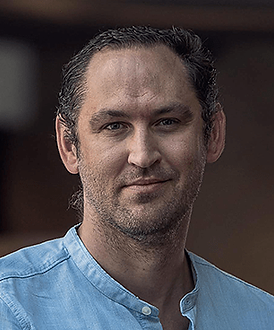
Raúl Vicente, University of Tartu, Estonia
Title: "From Chladni to Cognition"
Raúl Vicente is Full Professor of Data Science at the Institute of Computer Science, University of Tartu, Estonia, where he teaches Neural Networks and Complexity Science. Since 2026, he has also been Vice Head of the Institute of Computer Science. His research lies at the intersection of neuroscience, artificial intelligence, and dynamical systems. He received the Extraordinary PhD Award in Physics from the University of the Balearic Islands in 2006 and the 2007 QEOD Prize of the European Physical Society for the best PhD thesis in Applied Optics. He was a visiting scholar in the Department of Electrical Engineering at UCLA in 2003 and 2004, and a Junior Fellow at the Max Planck Institute for Brain Research in Frankfurt, Germany, from 2006 to 2013

Pedro David García, Instituto de Ciencia de Materiales de Madrid (ICMM-CSIC)
Title: "Computing with the Complex Nonlinear Dynamics of an Optomechanical Resonator"
Bio: Pedro David García is a Científico Titular at the Instituto de Ciencia de Materiales de Madrid (ICMM-CSIC). His research centres on disordered photonics and quantum photonics in disordered nanostructures, where he has studied Anderson localization and the interplay between fabrication disorder and light–matter interaction. This work has evolved naturally toward silicon cavity optomechanics and, most recently, neuromorphic computing using the nonlinear and complex dynamics of optomechanical resonators. He coordinates the EIC Pathfinder project NEUROPIC on this topic.

Francesco da Ros , Technical University of Denmark
Title: "Integrated photonic computing – from matrix-vector multipliers to reservoir computing"
Francesco Da Ros is an associate professor in the Machine Learning in Photonic Systems (MLiPS) group at DTU Electro. He received his Ph.D. in 2015 from the Technical University of Denmark (DTU), including a research stay at the Fraunhofer Heinrich-Hertz-Institute. Between 2015 and 2018, he worked within the Center for Silicon Photonics for Optical Communications at DTU and joined the MLiPS group in 2019. His current research focuses on optical and digital information processing, including optical computing, optical signal processing, digital signal processing, and machine learning applied to optical communication systems. He is an OPTICA Ambassador and Senior Member, an IEEE Senior Member, and has served in several technical program committees, including CLEO US (Program Chair 2023, General Chair 2025), CLEO-EU, ECOC, PSC, and SPIE Europe.

Miguel Ángel Muñoz, Universidad de Granada
Title: "Scaling of Neural Network Activity and Optimal Functionality:
From Real Neurons in the Brain to Reservoir Computing"
Prof. Miguel A. Muñoz is a statistical physicist at the Universidad de Granada and a leading expert on critical phenomena, widely recognized for his contributions to self-organized criticality, phase transitions, and dynamical scaling. His research extends the concepts of statistical physics to living systems, complex networks, and neuroscience, where criticality is viewed as a potential functional regime for information processing and adaptability. Combining analytical theory, numerical simulations, and clear conceptual frameworks, his work emphasizes universality and robustness in complex adaptive systems, contributing to a deeper understanding of emergent collective behavior.

Roberta Zambrini, IFISC (CSIC-UIB)
Title: "Reservoir computing meets complex quantum systems"
Roberta Zambrini is a senior scientist at CSIC-IFISC (Mallorca), specializing in complex quantum systems, quantum optics, and quantum machine learning. She has authored around 100 scientific articles, delivered more than 50 invited talks, supervised several research contracts, and supervised 7 PhD theses, with 5 more currently in progress. She led the 2020 CSIC White Paper on Digitalization and served as Associate Editor of Physical Review Letters (2020–2026). She has coordinated European, national, and regional projects, is guarantor of IFISC’s center of excellence, is active in outreach and the Women for Quantum initiative, represents Spain in QCN, and serves as vice-director of IFISC.

Leonardo Del Bino, Akhetonics
Title: "More FLOPS, fewer Watts" is that all?
Leonardo graduated in applied physics from the University of Florence and obtained his PhD in applied photonics from Heriot-Watt University in Scotland. He then worked at the National Physical Laboratory (UK) and Max Planck Institute for the science of light (Germany) before cofounding Akhetonics. During his academic career, he invented all-optical memories and logic gates and studied the application of nonlinear optics to digital devices. Also, he developed clean room fabrication processes for low losses devices in silica and silicon nitride. A few years ago, Leonardo made a career shift by cofounding Akhetonics, applying his expertise in nonlinear optics devices and fabrication towards the realization of the first all-optical CPU.
Organising Committee

Miguel Cornelles Soriano
UIB

Claudio Mirasso
UIB

Natalia Manuilovich
Aston University
Supported by
.png)

