


RESEARCH SPOTLIGHT
Hi, I am
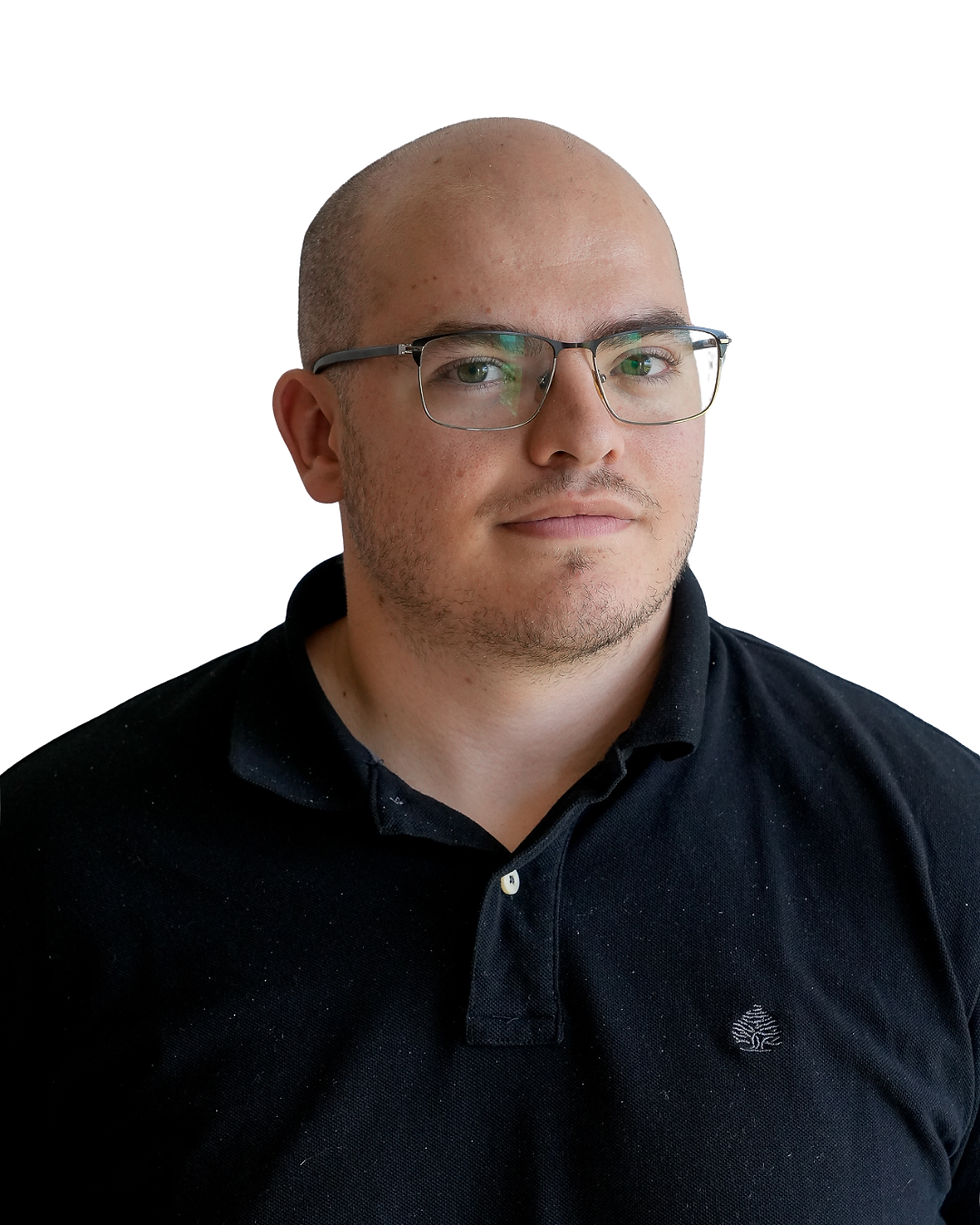
Ismael Castillo Illera

HOST INSTITUTE
VLC Photonics
PROJECT TITLE
Photonic Convolutional Accelerators: harnessing Temporal and Wavelength-Division Processing in PICs
KEY WORDS
PICs Time-interleaving Wavelength Demultiplexing Convolution
RESEARCH AIM
My research aims to develop a photonic chip accelerator so that we can keep pace with the increasing computational requirements of artificial intelligence.

RESEARCH OVERVIEW
What if I told you that despite not knowing what a convolution is, you're applying it every day? One of the prominent uses of convolution is to process images, like the funny filters you use in instagram or the the nice warm one, that you use to impress your crush. There are other areas that use convolution, for example, in AI. My research tries to solve a problem that is raising with the data center infrastructure development: how can we make it quicker and less power hungry? One solution is to use Photonic Integrated Circuits. This technology enables to operate at the speed of light using the semiconductor methods that were developed for microelectronics.
RESEARCH CHALLENGE
How can photonics make convolutions quicker, more power efficient and in a scalable manner?
RESEARCH INNOVATION
I would like to combine the two strategies that I commented earlier and I'm also considering implementing hybrid integration approaches to my chips.
RESEARCH IMPACT
Through this research, I hope to gain a deeper understanding of the photonic integrated circuit (PIC) value chain and develop the skills to design and create my own photonic chips.
RESEARCH SUMMARY
Convolutions has found various applications like image or speech recognition. In terms of speed and electrical power consumption, having photonic integrated circuits can be beneficial to scale the capabilities of this operations especially in LLMs. Implementing the convolution operation using PICs has two main strategies: One is Demultiplexing the signal in power lines, and delay each one of them a fixed amount (time-interleaving), then modulate the amplitude to apply the Kernel and recombine, giving the right convoluted signal. Another is Directly encoding the information in the frequency domain and then demultiplex the signal, manipulate each frequency and then recombine. My PhD will consist on exploring architectures that combine both of them, amplitude and frequency demultiplexing.
RESEARCH VISUAL

RESEARCH JOURNEY
RESEARCH SECONDMENT
University of the Balearic Islands (UIB), Spain (2 months) & Ghent University, Belgium (2 months)
During my secondments at the University of the Balearic Islands (UIB), Spain, and Ghent University, Belgium, I will expand both my technical knowledge and professional network within the field of photonics. At UIB, I will gain a deeper understanding of the university's photonics research, its experimental facilities, and how VLC Photonics' services can support and enhance ongoing research activities. At Ghent University, I will explore new research methods and working practices while collaborating with IMEC professionals, strengthening my expertise in interdisciplinary collaboration and building connections between leading research institutions.
LEARNING GOALS
Better networking and business development.
RESEARCH BENEFITS
These secondments will provide valuable opportunities to establish new collaborations, exchange ideas with researchers from different institutions, and explore innovative approaches that can strengthen and broaden my research.
CAREER DEVELOPMENT
I believe this experience will help me build valuable professional connections and expand my network, creating opportunities for future collaborations and potential career prospects, particularly with IMEC's new research centre in Málaga.
MORE THAN PHD
Why did you decide to join POSTDIGITAL+ ?
I joined POSTDIGITAL+ because it offers the ideal combination of academic research and industrial collaboration, allowing me to pursue cutting-edge R&D while aligning with my long-term interest in industry.
What do you think is the biggest advantage of being part of the International Doctoral Network?
The International Doctoral Network provides invaluable opportunities to collaborate with leading researchers across Europe, attend international conferences, and build a strong professional network within the photonics community.
What skill have you developed the most so far?
One of the most valuable skills I have developed is knowing when to seek guidance and collaborate effectively, allowing me to learn more efficiently and make better use of my time.
What are your career ambitions after completing your doctorate?
After completing my doctorate, I hope to pursue a career in business development, building strategic partnerships, expanding professional networks, and supporting innovation through funding and investment opportunities.
What inspired you to pursue this research Area?
I believe photonics has enormous potential to transform future technologies through real-world industrial applications. With artificial intelligence driving rapid innovation, I am excited to contribute to the development of next-generation photonic solutions.
What surprised you most since starting your PhD?
What surprised me most is the breadth and depth of knowledge involved in research, and how every new challenge presents an opportunity to continue learning and developing as a researcher.