


RESEARCH SPOTLIGHT
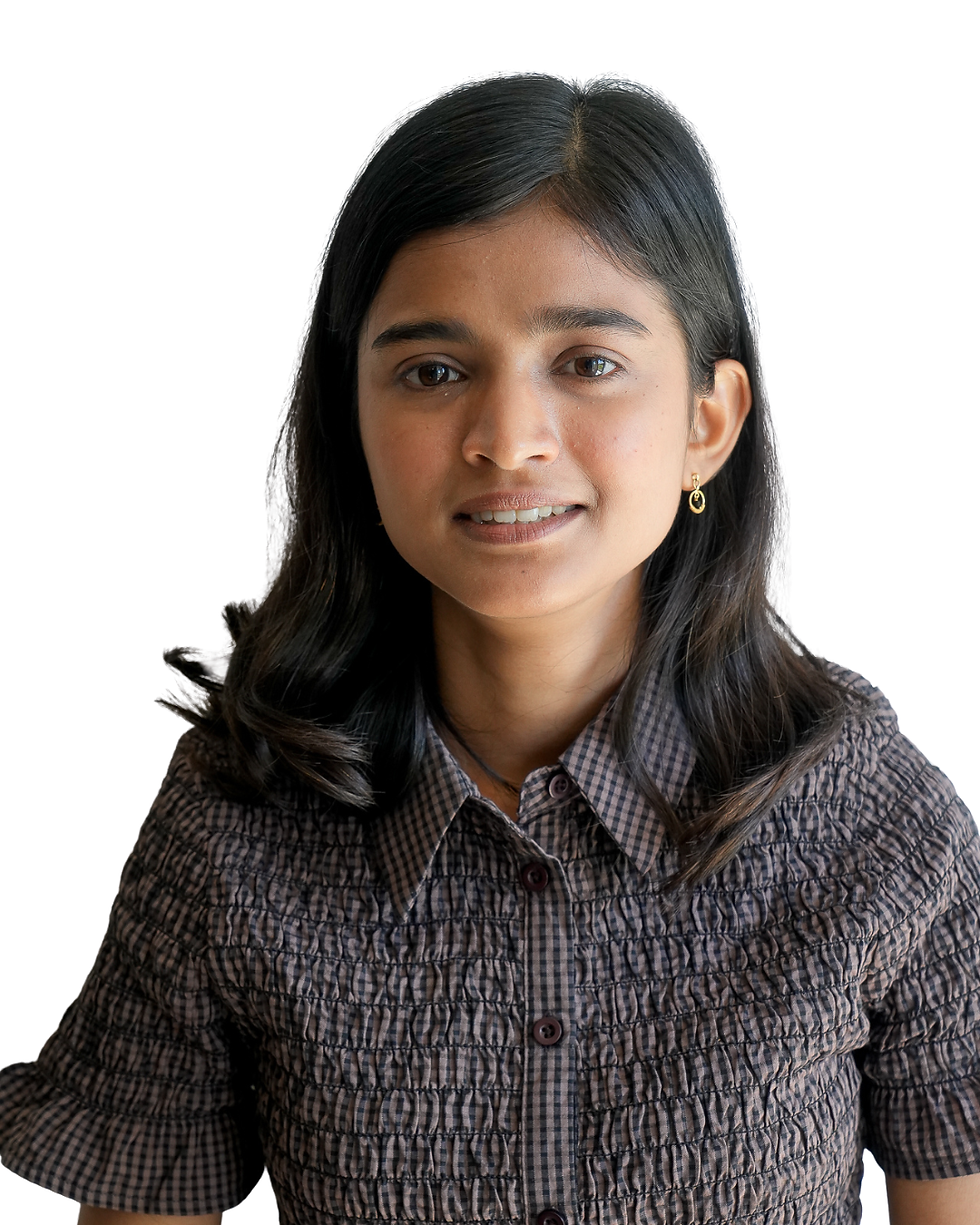
Hi, I am
Adhila Nazarudeen

HOST INSTITUTE
IFISC (UIB-CSIC)
PROJECT TITLE
Optical computing with few-mode and multimode fibers
KEY WORDS
Spatiotemporal computing, Fewmode or Multimode fibers, optical computing, machine learning, Nonlinear computing
RESEARCH AIM
My research aims to exploit the spatiotemporal properties of few-mode and multimode optical fibers for optical computing so that compact, reliable, and high-performance photonic computing systems can be realized.

RESEARCH OVERVIEW
As the demand for faster and more energy-efficient computing continues to grow, researchers are exploring light (photons) as an alternative to electricity (electrons) for processing information. Unlike electronic systems, optical systems can process many signals simultaneously at extremely high speeds while consuming less energy. Several optical platforms, including integrated photonic chips, free-space optical systems, and optical fibers, are being investigated for this purpose. My research focuses on multimode fibers, where the natural propagation of light can be exploited to perform computation. Using computer simulations and laboratory experiments, I study how these systems can be designed and optimized for high-speed, energy-efficient information processing, contributing to the development of future photonic computing technologies.
RESEARCH CHALLENGE
The main challenge addressed by my research is the development of a practical and reliable fiber-based optical computing system capable of performing complex high-speed spatiotemporal computations. While multimode and few-mode fibers provide rich propagation dynamics that are attractive for information processing, their computational performance is highly dependent on operating conditions and can be affected by environmental perturbations and system instabilities. My research aims to understand and optimize these dynamics through numerical and experimental investigations, enabling robust linear and nonlinear computational functionalities while improving the reproducibility and stability of the optical computing platform.
RESEARCH INNOVATION
My research combines the intrinsic spatiotemporal dynamics of multimode optical fibers with numerical modelling and experimental investigations to develop a practical multimode fiber-based optical computing platform. Unlike many existing optical computing approaches, this work exploits the natural propagation dynamics of light in multimode fibers as a computational resource for both linear and nonlinear information processing. A key aspect of the research is the optimization of system performance under realistic operating conditions, with particular emphasis on improving the robustness, stability, and reproducibility of multimode fiber-based optical computing systems for future practical implementations.
RESEARCH IMPACT
What excites me most about my research is the opportunity to combine numerical exploration with experimental realization. Numerical studies allow me to investigate many ideas efficiently and develop new approaches without the constraints of a physical setup. It is particularly rewarding when these concepts can be translated into experiments and the experimental results confirm the predicted behaviour. This interplay between simulations and experiments continually motivates me to explore new ideas, refine existing approaches, and deepen my understanding of multimode fiber-based optical computing.
RESEARCH SUMMARY
My research focuses on optical computing using few-mode and multimode optical fibers by exploiting their spatiotemporal propagation dynamics for information processing. The work investigates how encoded optical signals evolve through fiber propagation and how the resulting spatial and temporal features can be utilized for linear and nonlinear computational tasks. The research combines numerical modelling with experimental investigations to optimize an existing all-optical fiber computing platform, evaluate different operating conditions, and study the role of nonlinear signal transformations in enhancing computational performance. In addition, the work examines the stability and robustness of the system and explores suitable signal processing and classification methods for optical information processing. The overall objective is to advance compact, high-speed, and energy-efficient photonic computing architectures based on optical fiber technologies.
RESEARCH VISUAL

RESEARCH JOURNEY
RESEARCH SECONDMENT
Aston University, United Kingdom (2 × 3-month secondments)
At Aston University, two three-month secondments will provide advanced training in multimode fibre-based optical computing. The first will focus on few-mode fibre decomposition methodologies and the advanced analysis of multimode fibre propagation, strengthening expertise in modal analysis and numerical modelling. The second will explore spatiotemporal encoding and detection techniques for multimode fibre-based optical computing systems, providing hands-on experience in advanced experimental photonics, optical signal processing, and the integration of photonic computing methodologies within an international collaborative research environment.
LEARNING GOALS
During my secondments, I am particularly looking forward to gaining hands-on expertise in different spatiotemporal encoding, and detection techniques, FMF decomposition. Working with researchers at Aston University will allow me to deepen my understanding of advanced multimode fiber characterization methods and broaden my experimental and numerical skills. I also look forward to exchanging ideas with experts in the field, learning different research approaches, and applying the knowledge gained to improve the performance, stability, and reliability of MMF based optical computing systems. These experiences will strengthen both my technical expertise and my ability to conduct collaborative international research.
RESEARCH BENEFITS
The secondments will provide specialized expertise that directly complements the objectives of my PhD research. Training in few-mode fiber decomposition methodologies will improve my understanding of light propagation and modal dynamics, supporting the optimization of multimode fiber-based optical computing systems. The secondment focused on spatiotemporal encoding and detection will strengthen my ability to design, implement, and analyze optical computing experiments. In addition, collaborating with researchers at Aston University will expose me to new methodologies and perspectives, facilitating knowledge exchange and helping to improve the performance, robustness, and reproducibility of the multimode fiber-based optical computing platform developed during my PhD.
CAREER DEVELOPMENT
The secondments will support my long-term career by broadening both my technical expertise and my international research experience. They will provide specialized training in advanced multimode fiber characterization and optical computing methodologies while allowing me to work closely with leading researchers in the field. In addition to developing new experimental and analytical skills, these collaborations will strengthen my ability to work in multidisciplinary and international research environments. The knowledge, experience, and professional network gained during the secondments will be valuable for pursuing a future career in photonics research, whether in academia or industry.
MORE THAN PHD
Why did you decide to join POSTDIGITAL+ ?
I decided to join POSTDIGITAL+ because it offered the opportunity to contribute to an exciting research area that addresses one of the major challenges in modern computing: developing faster and more energy-efficient alternatives to conventional computing hardware. The project's focus on neuromorphic and physics-inspired computing, using unconventional photonic platforms for information processing, strongly aligned with my research interests. Equally important was the structure of the Doctoral Network itself. POSTDIGITAL+ provides an exceptional training environment through international collaboration, interdisciplinary research, specialized courses, secondments, and exposure to both academic and industrial partners. I saw it as an opportunity not only to conduct high-quality research but also to develop the technical, professional, and collaborative skills needed for a successful career in photonics and advanced computing.
What do you think is the biggest advantage of being part of the International Doctoral Network?
I believe the biggest advantage of being part of an international doctoral network is the opportunity to collaborate with researchers from different institutions, including both academic and industrial partners, as well as from diverse scientific disciplines and cultural backgrounds. The network provides access to complementary expertise, state-of-the-art research facilities, specialized training, and well-supported secondments that would not be available within a single research group. It also encourages the exchange of ideas and promotes interdisciplinary approaches to solving complex scientific challenges. Beyond research, the programme offers opportunities to learn the language and culture of the host countries, helping international researchers integrate into the local community and communicate more effectively. The strong funding support enables participation in conferences, workshops, training schools, and international collaborations, fostering both scientific and professional development. Overall, the network helps build technical expertise, communication and collaboration skills, and a global professional network that will be invaluable for my future career.
What skill have you developed the most so far?
The skills I have developed the most so far are the ability to combine numerical modelling with experimental research and to communicate my work confidently. I have learned how to design and perform optical experiments while using simulations to explore new ideas and interpret experimental observations. Developing the ability to move between these two approaches has significantly strengthened my analytical thinking and problem-solving skills. In addition, through conferences, workshops, seminars, and project meetings, I have become much more confident in presenting my research to both specialist and broader audiences. These experiences have greatly improved my scientific communication skills and my confidence as an independent researcher.
What are your career ambitions after completing your doctorate?
After completing my doctorate, I hope to continue working in photonics and optical computing, either in academia or industry, contributing to the development of next-generation information processing technologies.
What inspired you to pursue this research Area?
My interest in this research area developed gradually through my academic journey. During my master's project in astrophysics, I worked extensively on numerical simulations, which gave me a strong appreciation for computational modelling and exploring scientific problems through simulations. After completing my master's degree, I joined a research institute as a visiting student, where I had the opportunity to work on optical systems. That experience introduced me to experimental photonics, and I found it equally exciting to see how theoretical concepts could be realized in practice. When I came across this project, which uniquely combined both numerical and experimental research. It was exactly the type of interdisciplinary work I was looking for. Since joining the project, I have thoroughly enjoyed investigating optical computing through both simulations and experiments, and I am motivated to continue contributing to this rapidly evolving field.
What surprised you most since starting your PhD?
What surprised me the most since starting my PhD and joining POSTDIGITAL+ was how well-structured and collaborative the programme is. At the beginning, I was unsure whether completing a PhD within three years would be realistic. However, as the project progressed, I realized that the strong support from supervisors, the involvement of researchers across different institutions, and the collaborative environment make this goal achievable. I was also impressed by the level of commitment from everyone involved in the network. The number of workshops, summer schools, training events, and collaborative activities organized throughout the year provides continuous opportunities to learn and exchange ideas. Seeing the progress made by fellow doctoral candidates within such a short time has been both motivating and inspiring, and it has reinforced my confidence in the programme and in my own research journey.